
Payload CMS vs Directus: Which Headless CMS Wins in 2026?
Compare Payload CMS and Directus for your next project. Deep dive into architecture, performance, deployment, and pricing to find the right headless CMS.
Quick Summary: Directus and Payload are both open-source headless CMS platforms, but they serve different architectural needs. Directus operates as a standalone API layer that wraps directly around your database, ideal for teams needing a separate content server. Payload embeds directly into Next.js applications as code-first middleware, making it perfect for developers who want everything in one deployment unit.
The headless CMS market has matured considerably. Developers aren’t just choosing between WordPress and Drupal anymore. Modern applications demand flexible content infrastructure that separates the backend from presentation layers.
Both Directus and Payload have emerged as serious contenders in the open-source headless CMS space. But here’s the thing—they represent fundamentally different architectural philosophies. One treats your database as the single source of truth. The other lives inside your application code.
Understanding which approach fits your project architecture matters more than feature checklists. Let’s break down what actually separates these platforms.
Understanding the Core Architectural Difference
Before comparing specific features, the architectural split between these platforms shapes everything else.
Directus positions itself as a database-first headless CMS. It’s a standalone Node.js application that sits on top of your SQL database—PostgreSQL, MySQL, or others. The admin panel, API layer, and authentication system run as a separate service from your frontend.
Payload takes a completely different route. It’s designed to embed directly into your Node.js application, particularly Next.js projects. The CMS becomes part of your application’s codebase rather than a separate service.
This isn’t just a technical detail. It fundamentally changes deployment, development workflow, and infrastructure costs.
Deployment Architecture: Standalone vs Embedded
With Directus, teams run a dedicated Node.js server. This server needs to stay running 24/7 to handle API requests and admin panel access. According to community discussions, infrastructure typically runs under $200 per month for teams with around 10 active editors.
The standalone approach means clear separation of concerns. Content editors access the Directus admin panel at its own URL. Frontend applications consume the REST or GraphQL API. Backend and frontend scale independently.
Payload’s embedded model changes the calculation entirely. The CMS deploys as part of Next.js serverless functions or app directory routes. No separate server required. Everything lives in one deployment unit.
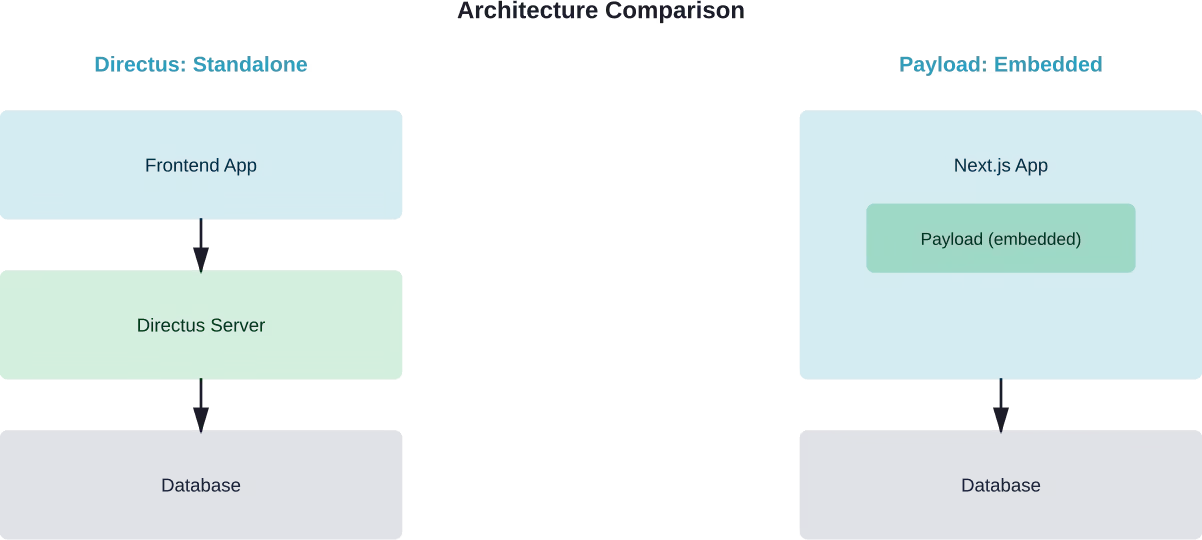
For serverless deployments, this architectural choice becomes critical. Payload naturally fits serverless patterns. Directus requires a persistent server environment.
Database Relationship and Data Ownership
How each platform handles the database reveals another fundamental split.
Directus wraps directly around existing SQL databases. Point it at PostgreSQL or MySQL, and it generates a complete admin interface automatically. The database schema drives everything. Change a column, and Directus reflects it instantly.
This database-first approach means teams truly own their data structure. No proprietary formats. No CMS-specific abstractions. Just standard SQL tables that any tool can access.
According to the official Directus documentation, the platform treats the database as the single source of truth. The CMS becomes a dynamic API layer rather than a system that owns the data structure.
Payload handles databases differently. Configuration lives in TypeScript code. Developers define collections through code-based schemas that Payload then syncs to the database.
Here’s what a typical Payload collection definition looks like based on available documentation:
import { CollectionConfig } from ‘payload/types’;
const Articles: CollectionConfig = {
slug: ‘articles’,
admin: {
useAsTitle: ‘title’,
},
access: {
read: () => true,
},
fields: [
{
name: ‘title’,
type: ‘text’,
required: true,
},
],
};
The code-first model makes version control straightforward. Every schema change gets tracked through Git. Team collaboration follows standard development workflows.
But which approach works better? That depends entirely on the existing infrastructure and team structure.
Performance Benchmarks
Real-world performance varies by deployment configuration, but available comparison data shows measurable differences.
| منصة | Response Time (avg) | استخدام الذاكرة |
Startup Time
|
|---|---|---|---|
| Directus | 35ms | 180MB | 5s |
| Payload | 28ms | 150MB | 4s |
Payload shows slightly better raw performance numbers in testing scenarios. The embedded architecture reduces network hops since the CMS and application share the same runtime.
Directus performance benefits from architectural isolation though. Scaling the content API independently from frontend applications provides flexibility under heavy load.
Memory usage matters particularly for serverless deployments where cold starts impact user experience. Payload’s lighter footprint gives it an edge in function-based architectures.
Developer Experience and Customization
Both platforms prioritize developer control, just through different mechanisms.
Directus Extension System
Directus offers extensions through interfaces, displays, modules, and panels. Developers build custom admin components using Vue.js. The extension API allows deep customization without forking the core codebase.
Custom endpoints extend the REST API. Hooks trigger on data operations. The official Directus changelog indicates that version 11.15.0 added a deployment module for triggering deploys in Vercel.
The translation store is also available to extension authors, making multi-language extensions more practical.
Payload Configuration Flexibility
Payload leans heavily into TypeScript configuration. Everything from field types to access control gets defined in code.
Custom React components drop into the admin panel. Server-side hooks integrate with the collection lifecycle. Since Payload runs as part of the application, developers access the same dependencies and utilities throughout the stack.
The tight integration means less context switching. Backend logic, CMS configuration, and frontend code all live in the same repository.
However, following Payload’s acquisition by Figma, some community discussions have raised concerns about potential vendor lock-in and roadmap uncertainty following the Figma acquisition. Teams evaluating Payload for production use should monitor how the ownership change affects development direction.
Content Modeling and Workflows
How each platform handles content structure affects daily editorial workflows.
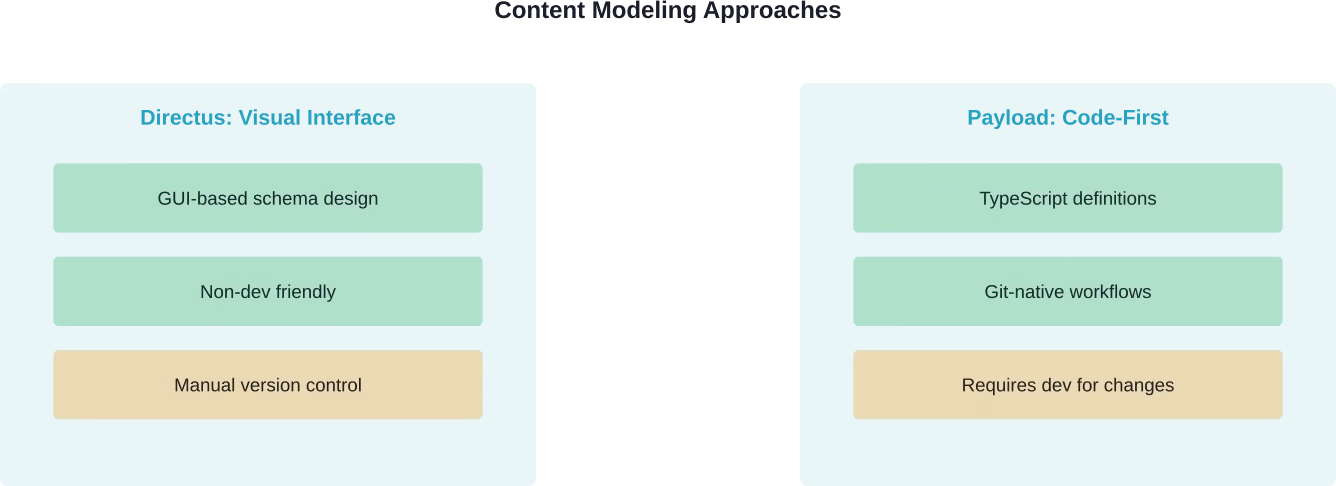
Directus provides a visual interface for creating collections and fields. Non-technical team members can design content models through the admin panel. Relationships between collections get configured through dropdowns and forms.
The platform supports advanced content workflows according to official documentation. Teams can build automated localization flows using tools like Inngest for orchestrating translations across multiple languages.
Payload requires developers to define content models in code. This makes rapid prototyping slightly slower but ensures all schema changes go through version control and code review.
For teams with dedicated developers, the code-first approach prevents accidental schema changes. For teams where content strategists need direct control over structure, Directus provides more immediate flexibility.
Deployment Options and Infrastructure Costs
Infrastructure requirements differ significantly between these platforms.
Directus Deployment
Directus requires a persistent Node.js environment. Options include:
- Traditional VPS hosting (DigitalOcean, Linode)
- Platform-as-a-Service (Railway, Render)
- Directus Cloud managed hosting
- Self-hosted Kubernetes clusters
Directus Cloud hosting starts at $99/month for the Professional tier. The Business Source License allows free self-hosting for anybody under $5,000,000 in total finances or revenue.
For teams choosing self-hosting, infrastructure typically runs under $200 monthly for moderate usage based on community reports.
Payload Deployment
Payload’s embedded nature supports more deployment patterns:
- Serverless (Vercel, Netlify Functions)
- Traditional Node.js hosting
- Docker containers
- Next.js hosting platforms
The serverless compatibility particularly appeals to teams already using Vercel for Next.js applications. Everything deploys together without managing separate services.
The official Directus changelog indicates that version 11.15.0 added a deployment module for triggering deploys in Vercel, showing convergence in deployment workflow integration.
| Consideration | Directus |
Payload
|
|---|---|---|
| Deployment Unit | Separate dedicated server | Part of Next.js app |
| Serverless Support | Requires persistent environment | Native serverless compatibility |
| Scaling Strategy | Scale CMS independently | Scales with application |
| Minimum Infrastructure | Dedicated Node.js server | Can use existing Next.js host |
API Capabilities and Frontend Integration
Both platforms expose content through modern APIs, though with different approaches.
Directus automatically generates REST and GraphQL APIs from the database schema. Add a table, get instant endpoints. Filtering, sorting, and field selection work out of the box.
The auto-generated GraphQL API provides type-safe queries without manual schema definition. Real-time subscriptions allow frontend applications to receive live updates when content changes.
Payload provides REST and GraphQL endpoints as well. Since configuration lives in code, the API schema gets defined alongside collection structures. Type definitions export directly from the Payload config, enabling end-to-end TypeScript safety.
For Next.js applications specifically, Payload offers tighter integration. Direct database queries within Server Components bypass the API layer entirely. This reduces latency and simplifies data fetching patterns.
Security and Access Control
Enterprise applications require granular permission systems.
Directus implements role-based access control through the admin interface. Permissions configure at the collection and field level. Rules can restrict read, create, update, and delete operations based on user roles or custom logic.
Field-level permissions hide sensitive data from specific roles. Item-level permissions filter content based on relationships or field values.
Payload defines access control in code alongside collection schemas. Functions determine permissions, allowing complex conditional logic:
access: {
read: ({ req: { user } }) => {
if (user?.role === ‘admin’) return true;
return { status: { equals: ‘published’ } };
},
}
The programmatic approach provides unlimited flexibility but requires developer involvement for permission changes.
Migration and Integration Considerations
Moving existing content into either platform requires different strategies.
Directus works well for legacy database migration. Point it at an existing PostgreSQL or MySQL database, and it generates an admin interface immediately. According to official migration documentation, teams can move from WordPress to Directus by exporting post data and uploading it through the Directus API.
The platform’s database-agnostic design means it integrates with existing data infrastructure. No need to transform schemas into proprietary formats.
Payload migration requires creating collection configs that match the existing data structure, then importing content through the API or direct database operations.
For teams with established databases, Directus offers a faster migration path. For greenfield projects, both platforms work equally well.
Community and Ecosystem
Open-source success depends heavily on community health.
Directus maintains an active community with extensive documentation, Discord channels, and regular updates. The project has gained traction among developers seeking database-first solutions.
Payload built a strong following in the Next.js community before the Figma acquisition. Whether that momentum continues under new ownership remains to be seen. Some developers in community discussions have expressed concerns about Payload’s roadmap direction following the Figma acquisition.
Both platforms appear in curated lists of headless CMS platforms on GitHub, such as the awesome-headless-cms repository, indicating recognition within the broader ecosystem.
Real-World Use Cases
Different project types favor different platforms.
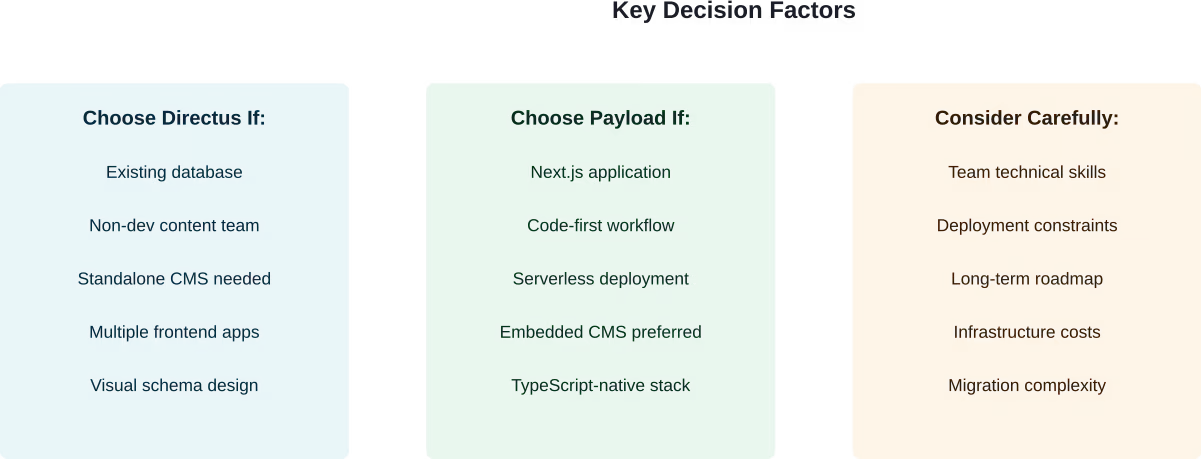
When Directus Makes Sense
Multi-platform content distribution benefits from Directus’s standalone architecture. Publishing content to web, mobile apps, and digital signage from one source works cleanly.
Teams with existing PostgreSQL or MySQL databases can add Directus without restructuring data. Legacy system integration becomes straightforward.
Organizations where content managers need direct control over data structure prefer the visual interface.
When Payload Fits Better
Next.js applications gain the most from Payload’s embedded approach. Everything unfolds together. No separate CMS infrastructure to manage.
Development teams comfortable with code-first workflows appreciate TypeScript-native configuration. Schema changes flow through standard Git workflows.
Serverless-first architectures align naturally with Payload’s design. Cold start performance and function-based hosting work well.
Pricing and Licensing
Both platforms offer open-source licenses with different terms.
Directus uses the Business Source License. Teams can self-host for free under $5,000,000 in total finances or revenue according to official sources. Above that threshold, licensing fees apply.
Payload maintains an open-source license that allows free self-hosting. The Figma acquisition may change future licensing terms, though no announcements have been made yet.
For most teams, self-hosting on both platforms remains free. Infrastructure costs become the primary expense.
Making the Decision
The right choice depends on specific project requirements and team structure.
Teams should evaluate based on:
- Existing infrastructure and databases
- Developer vs non-developer content management needs
- Deployment environment constraints
- Frontend framework choices
- Budget for infrastructure and potential licensing
Directus excels when teams need a powerful standalone content API that wraps existing databases. The visual interface and independent scaling make it ideal for traditional CMS deployments with modern headless benefits.
Payload shines for Next.js applications where embedding the CMS directly into the application reduces complexity. Code-first configuration and TypeScript integration appeal to developer-focused teams.
Neither platform is objectively better. The architectural differences serve different use cases.
Don’t Just Compare CMS Options – Make the Final Choice Work
Choosing between Payload and Directus is important, but the real work starts after that decision. No matter which CMS you go with, you still need backend systems, integrations, and a product that actually runs in production. That’s where a team like موبيان can support the process. They focus on building full digital products, from backend development to system integration and ongoing scaling.
Mobian typically joins as an extension of your team, helping to move projects forward when internal capacity is limited or timelines start slipping. Their role isn’t tied to a specific CMS, but to making sure the entire system works as expected.
If you’ve made your choice and need to turn it into a working product, contact موبيان and get the technical side handled before it slows everything down.
خاتمة
Choosing between Payload CMS and Directus comes down to architectural preference rather than feature comparison.
Directus treats the database as the foundation and builds a flexible API layer on top. Teams with existing databases, non-technical content managers, or multiple frontend applications find this approach practical and powerful.
Payload embeds directly into applications as code-first middleware. Next.js teams, developers preferring TypeScript configuration, and serverless deployments benefit from the integrated architecture.
Both platforms represent mature, production-ready solutions to headless content management. The decision should align with existing infrastructure, team capabilities, and deployment requirements rather than trying to pick an objectively “better” option.
Evaluate both platforms with a proof-of-concept project. Build a simple content model, test deployment to your target environment, and involve the actual team members who will use the system daily.
The best headless CMS is the one that fits naturally into workflows without forcing architectural compromises.
الأسئلة الشائعة
Can Directus work with existing databases?
Yes. Directus is specifically designed to wrap around existing SQL databases. Point it at PostgreSQL or MySQL and it generates an admin interface automatically without requiring schema changes.
Does Payload require Next.js?
No, though Payload integrates most tightly with Next.js. It can run as a standalone Express application or embed into other Node.js frameworks. The deepest integration happens with Next.js though.
Which platform performs better?
Available benchmarks show Payload with slightly better response times and lower memory usage. Real-world performance depends heavily on deployment configuration, database optimization, and caching strategies.
How do licensing costs compare?
Both platforms offer free self-hosting for most teams. Directus uses a Business Source License that requires licensing fees for organizations over $5,000,000 in finances. Directus Cloud managed hosting starts at $99 monthly. Payload currently maintains open-source licensing though future changes may occur under Figma ownership.
Can these platforms handle multi-language content?
Yes. Both support internationalization. Version 11.3.5 and 11.4.0 introduced Marathi language support with 100% coverage. According to official documentation, Directus can orchestrate automated localization workflows for translating content across languages.
Which has better TypeScript support?
Payload is TypeScript-native with configuration entirely in TypeScript. Types export directly from collection configs. Directus supports TypeScript but configuration happens through the database schema rather than TypeScript files.
What happens if Payload’s roadmap changes under Figma?
Some community discussions have raised concerns about potential vendor lock-in and roadmap uncertainty following the acquisition. Teams should monitor official announcements and consider the open-source nature which allows forking if needed.