
Directus vs Strapi: Headless CMS Comparison 2026
Compare Directus and Strapi features, pricing, and performance. Find the best open-source headless CMS for your project with real data and benchmarks.
Quick Summary: Directus and Strapi are both popular open-source headless CMS platforms, but they serve different needs. Strapi offers a developer-friendly, all-in-one solution with built-in content management features, while Directus takes a database-first approach that works with existing SQL databases. The choice depends on whether you prioritize rapid API generation (Strapi) or direct database control (Directus).
Choosing between Directus and Strapi isn’t just about picking a headless CMS. It’s about selecting the right foundation for how content flows through applications, how teams collaborate, and how much control developers maintain over the underlying data layer.
Both platforms have carved distinct positions in the open-source headless CMS landscape. Strapi has built a reputation for developer experience and rapid API generation. Directus positions itself as a database-first tool that wraps around existing SQL schemas.
The differences matter more than the similarities. Here’s what separates these two platforms.
Core Architecture Differences
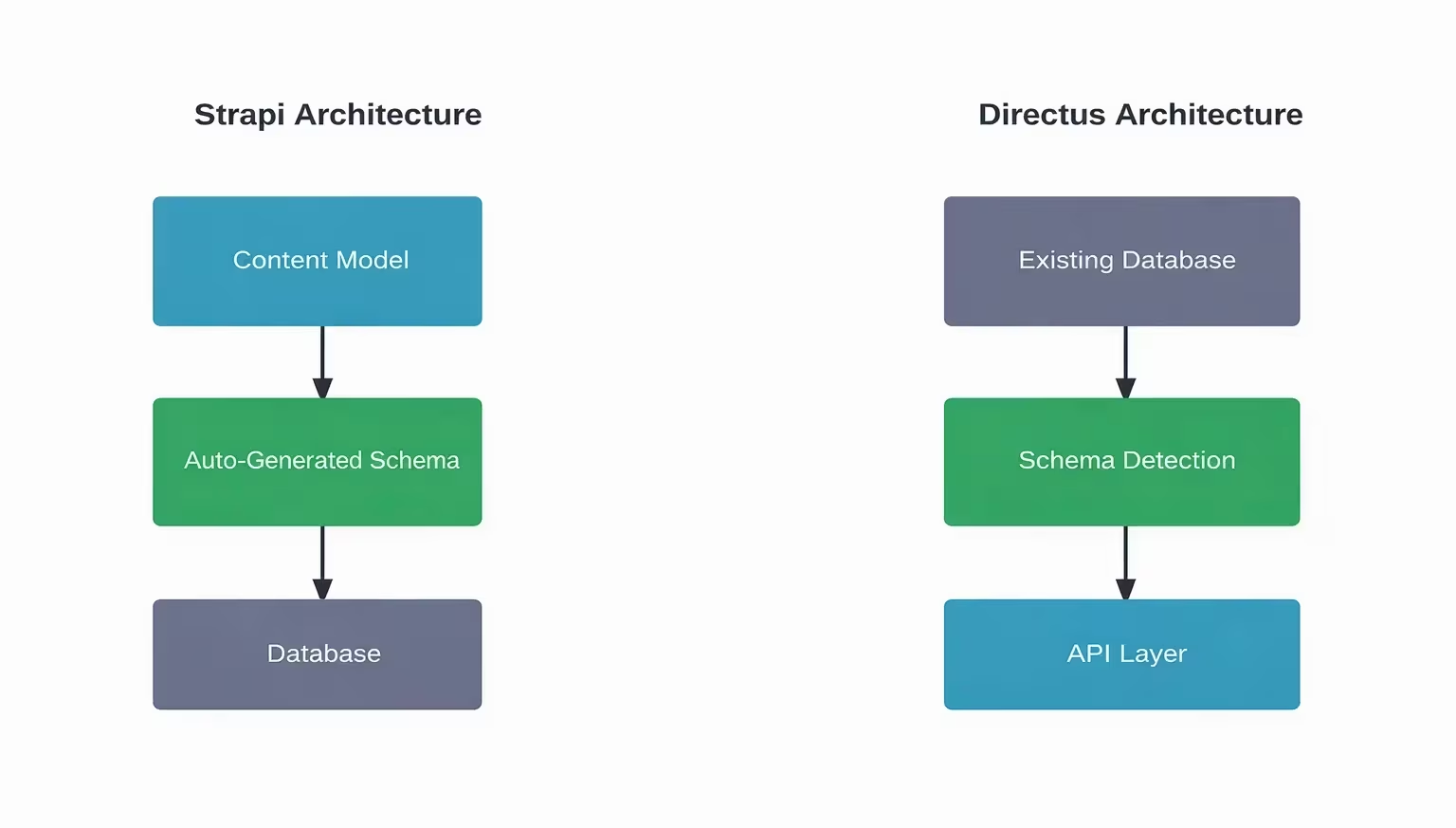
Strapi generates APIs and admin interfaces from content types defined within the platform. The architecture centers on content modeling through the admin panel, which then creates the database schema automatically.
Directus flips this approach. According to the official Directus website, it delivers instant APIs and a visual interface for any SQL schema. The database comes first. Directus reads the existing structure and builds the API layer on top.
This fundamental difference shapes everything else. Strapi owns the schema. Directus reflects it.
For greenfield projects starting from scratch, Strapi’s model-first approach speeds initial development. Teams define content types, add fields, and the database adapts automatically. But for organizations with existing databases or strict database governance requirements, Directus preserves direct SQL access while adding the content management layer.
Developer Experience and Flexibility
Strapi delivers what the official documentation calls instant API generation with built-in roles, drafts, and version history. According to official Strapi resources, the platform now includes full TypeScript support, giving developers type safety and instant IntelliSense in modern editors.
The Strapi 5 era introduced flattened API responses, eliminating the deeply nested populate chains from earlier versions. Lighter payloads mean fewer transformation steps in client code.
Directus offers 50+ powerful data management tools according to the official website, including visual data modeling, granular permissions, REST and GraphQL APIs, real-time collaboration, and workflow automation. All features ship in the open-source core.
Configuration approaches differ significantly. Strapi uses a file-based configuration system that works well with version control. Directus stores configuration in the database itself, which some teams prefer for multi-environment deployments.
For custom business logic, Strapi provides lifecycle hooks and controller customization. Directus offers custom endpoints and hooks but emphasizes working directly with the database when complex logic demands it.
Performance Benchmarks
Real-world testing shows measurable performance differences. Based on comparative analysis across platforms:
| Plataforma | Response Time (avg) | Uso de memoria |
Startup Time
|
|---|---|---|---|
| Strapi | 130ms | 250MB | 8s |
| Directus | 33ms | 180MB | 5s |
According to 2026 benchmarks, Strapi’s average read response times are 120–150 ms (on 4-core CPU), while Directus averages around 33 ms (on SQLite/1-core).
But performance isn’t just raw speed. Strapi’s built-in caching mechanisms and optimization features narrow the gap in production deployments with proper configuration.
Database Support
Database compatibility creates hard constraints for some projects. Strapi supports PostgreSQL, MySQL, MariaDB, and SQLite. MongoDB support existed in earlier versions but was deprecated.
Directus works with PostgreSQL, MySQL, MariaDB, MS SQL, and SQLite. The platform’s database-agnostic design means teams can switch database engines without rebuilding content models.
More importantly, Directus doesn’t lock down database access. Direct SQL queries remain possible. Database administrators can implement triggers, stored procedures, and custom indexes without breaking the CMS layer.
Strapi manages the database more tightly. Schema changes through the admin panel ensure consistency, but direct database modifications can create conflicts.
Content Management Features
Content workflows differ between platforms. Strapi includes draft/publish workflows, scheduled publishing, and role-based access control as core features. Content versioning and revision history help teams track changes.
Directus provides similar content management capabilities but emphasizes its visual relationship builder and field-level permissions. Granular control extends to individual field visibility and editing rights, not just collection-level permissions.
Media handling deserves attention. Both platforms include asset libraries with transformation capabilities. Strapi’s media library integrates tightly with content types. Directus treats files as first-class data collections with full relational capabilities.
For non-technical content editors, Strapi generally presents a more familiar CMS experience. The interface follows patterns that teams migrating from WordPress or traditional CMS platforms recognize immediately.
Pricing and Hosting Options
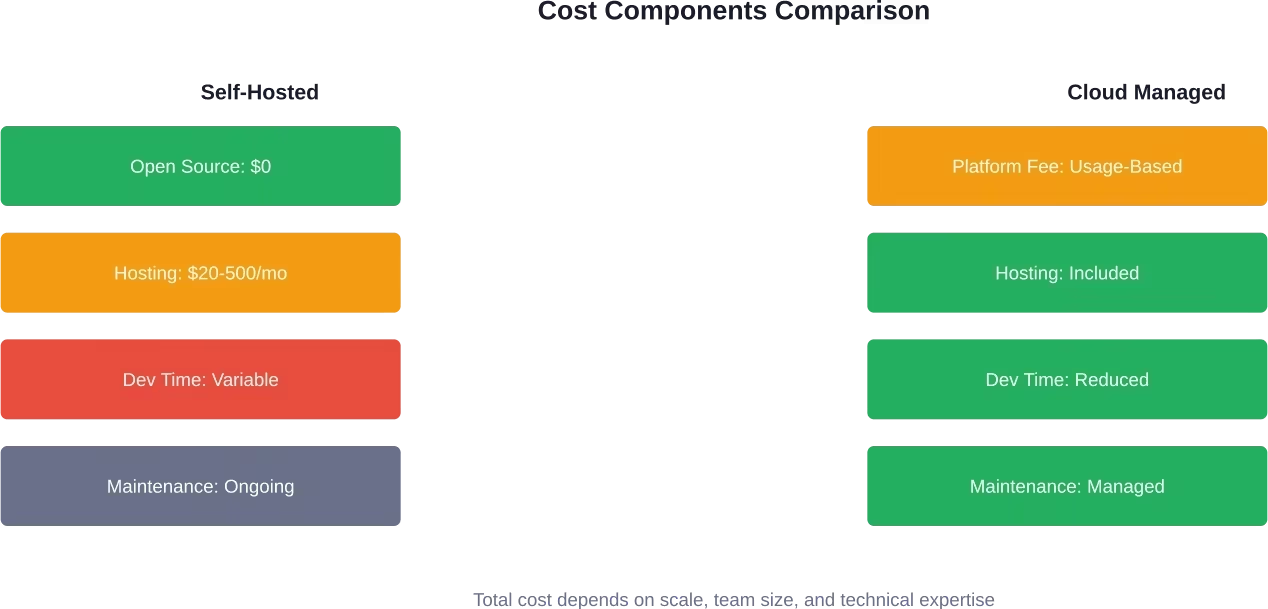
Both platforms offer free open-source core products with commercial cloud options. The self-hosted versions are genuinely free with no feature restrictions in either case.
Strapi Cloud pricing ranges from $18-450/month if billed monthly according to comparative pricing analyses, with specific tiers scaling by API requests and storage. Pricing changes regularly, so checking the official Strapi website provides current pricing details.
Directus Cloud offers pricing from $99/month if billed annually according to comparative analyses, though the company emphasizes the database-first architecture works particularly well for organizations with existing database infrastructure.
Self-hosting costs depend on application scale and traffic. Hosting expenses, server maintenance, and backup systems add to total cost of ownership for both platforms. Teams should budget for infrastructure plus development time.
Community and Ecosystem
Strapi has built significant community momentum with extensive plugin marketplace, active forums, and substantial documentation. The platform’s popularity creates advantages: more third-party integrations, more tutorials, more developers familiar with the system.
Directus maintains a smaller but dedicated community. The database-first approach attracts teams with specific technical requirements rather than broad mainstream adoption.
Both projects maintain active GitHub repositories with regular updates. Security patches and feature releases continue on predictable schedules.
When to Choose Strapi
Strapi makes sense for teams that need rapid API development without existing database constraints. The content-first modeling approach accelerates greenfield projects.
Marketing teams and content creators often prefer Strapi’s admin interface. The workflow features align with traditional CMS expectations while delivering headless architecture benefits.
Projects requiring extensive third-party integrations benefit from Strapi’s larger ecosystem. Official and community plugins cover common use cases from e-commerce to analytics.
When to Choose Directus
Directus excels when working with existing databases. Organizations with established SQL infrastructure can add a modern API and content management layer without database migration.
Teams that need direct database access for complex queries, reporting, or data science workflows appreciate Directus’s transparency. The platform doesn’t restrict SQL-level operations.
According to the official Directus website, the platform positions itself as headless data management rather than just headless content management. This distinction matters for applications managing structured data beyond typical CMS content.
Migration Considerations
Moving from traditional CMS platforms to either Strapi or Directus requires planning. Content migration, API integration, and team training all demand time.
Strapi provides migration scripts for common platforms and clear documentation for custom migrations. The content-type system maps reasonably well to WordPress post types and similar structures.
Directus migrations often involve database-level operations. Teams comfortable with SQL can build custom migration scripts that leverage Directus’s schema introspection.
Neither platform offers automatic, perfect migration paths. Budget time for data transformation, testing, and iteration.
Make Your CMS Choice Work: Bring in the Right Support
Comparing Directus and Strapi helps you pick the right tool, but the bigger challenge is building everything around it. No matter which CMS you choose, you still need backend systems, integrations, and a product that works reliably in production. This is where a development partner like Mobian can step in. They focus on custom software development, team augmentation, and building full digital products that go beyond just CMS setup.
Mobian typically works alongside in-house teams, helping with implementation, system integration, and long-term product development. Their role is not to replace CMS specialists, but to support the engineering side so the platform actually works as intended.
If you’ve made your choice between Directus and Strapi and need help turning it into a working product, contact Mobian and move forward without getting stuck on execution.
Making the Decision
The Directus versus Strapi choice comes down to architectural priorities. Teams starting fresh projects with standard content management needs will find Strapi’s development speed compelling. Organizations with existing databases or requirements for direct SQL access should evaluate Directus carefully.
Neither platform represents a universally superior choice. The right answer depends on existing infrastructure, team capabilities, and specific project requirements.
Testing both platforms with realistic use cases provides better insight than theoretical comparisons. Most projects can prototype basic functionality in either system within days.
For organizations serious about headless architecture, the investment in proper evaluation pays dividends. Check the official Directus and Strapi websites for current documentation, try both platforms with sample projects, and choose based on demonstrated fit rather than feature checklists.
Preguntas frecuentes
Is Directus faster than Strapi?
Based on benchmark testing, Directus shows faster average response times (33ms vs 130ms) and lower memory usage (180MB vs 250MB) in standard configurations. Real-world performance depends on implementation specifics, database optimization, and infrastructure quality.
Can Directus work with my existing database?
Yes. Directus is specifically designed to connect to existing SQL databases including PostgreSQL, MySQL, MariaDB, MS SQL, and SQLite. The platform reads the schema and builds APIs automatically without requiring database migration.
Which platform has better TypeScript support?
Strapi 5 includes native TypeScript support with automatic type generation for content types. Directus provides TypeScript definitions for the SDK but approaches typing differently due to its database-first architecture. Both support TypeScript development effectively.
How much does it cost to run Strapi or Directus?
Infrastructure costs range from $18 to $450 monthly depending on traffic and scale. Cloud-managed options charge based on usage—check official websites for current pricing as tiers and costs change frequently.
Can non-technical users manage content in these platforms?
Yes, both platforms provide visual admin interfaces for content management. Strapi generally offers a more familiar experience for users coming from traditional CMS platforms. Directus emphasizes powerful data management with steeper initial learning curves.
Which CMS has better documentation?
Strapi maintains more extensive documentation with broader community-contributed tutorials due to larger adoption. Directus documentation is thorough but assumes stronger technical backgrounds. Both provide official guides, API references, and community support channels.
Do these platforms support multi-language content?
Both Strapi and Directus support internationalization and multi-language content management. Strapi includes built-in i18n features. Directus handles translations through relational data structures with flexible implementation options.